


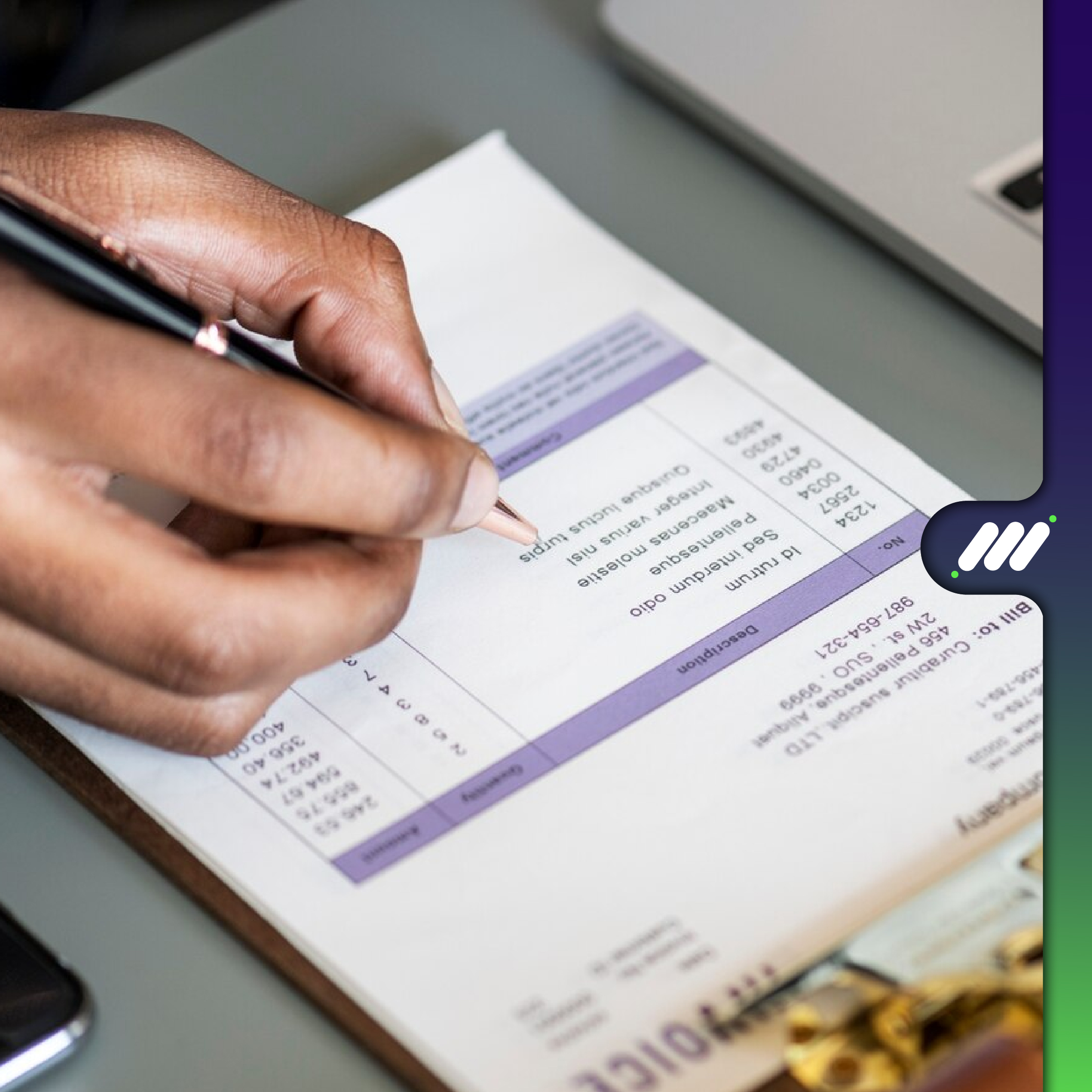
Understand everything about tax invoices, their importance, how to verify their accuracy, and steps to correct errors to avoid tax-related issues.
Running a business involves handling various important documents, and one of the most critical is the tax invoice. This document plays a key role in Thailand’s tax system. Whether you are a business issuing tax invoices or a customer receiving them, understanding their importance and how to verify their accuracy can help you avoid tax issues.



What is a Tax Invoice?
A tax invoice, commonly known as a VAT bill, is a crucial document that VAT-registered businesses must issue to buyers of goods or services. It serves as proof of a transaction and records the value-added tax (VAT) charged on top of the product or service price.
This document is essential in the tax system as it verifies the collection and payment of VAT. Buyers can use the tax invoice to claim input tax credits, deducting it from output tax when calculating the net VAT payable to the Revenue Department.
(https://drive.google.com/file/d/16AGEbxS_KO-vIj8Jw1c2F6zWwKJ9GAwS/view?usp=sharing)
Who Can Issue a Tax Invoice?
Not Every Business Is Allowed to Issue Tax Invoices
Only businesses that have registered for Value Added Tax (VAT) with the Revenue Department are authorized to issue official tax invoices.
Once VAT registration is complete, business owners are required to:
• Issue invoices in the company’s name for every sale of goods or service provided
Types of Tax Invoices
The Revenue Department classifies tax invoices into seven types. However, most businesses deal primarily with two main types:
- Abbreviated Tax Invoice: Used for direct sales of goods or services to general consumers (retail customers).
- Full Tax Invoice: Used for transactions with other VAT-registered businesses.
Other types include debit notes, credit notes, and receipts issued by government agencies that can serve as tax invoices under specific regulations.
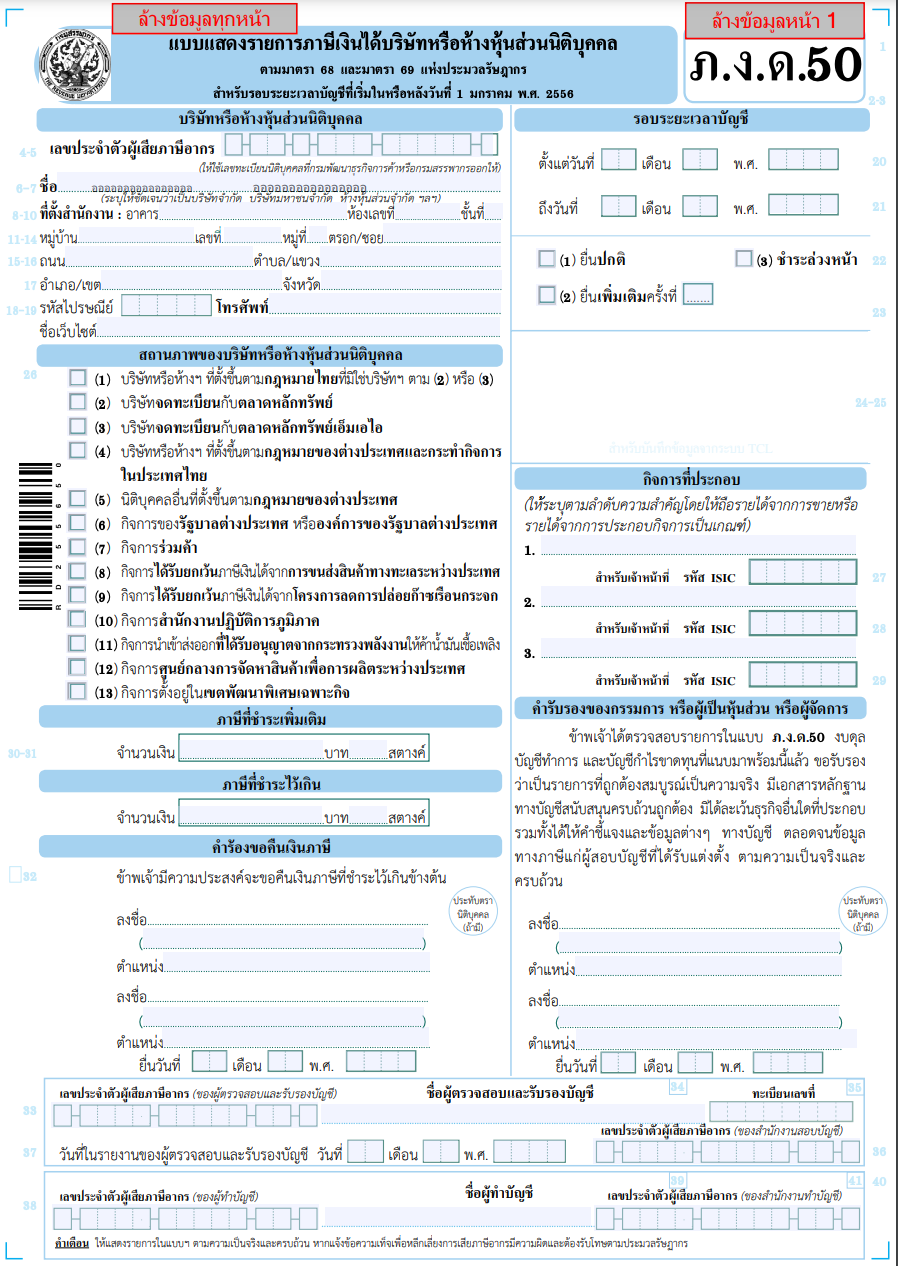
Mandatory Information on a Tax Invoice
A legally compliant tax invoice must contain specific details. The requirements vary based on the type of tax invoice:
Abbreviated Tax Invoice Must Include:
- The title "Abbreviated Tax Invoice" clearly visible.
- The business name or abbreviation and taxpayer identification number of the VAT-registered entity.
- Invoice serial number.
- Description of goods or services (can use product codes).
- Price, including VAT.
- Date of issuance.
- Other information required by the Revenue Department (if applicable).
Full Tax Invoice Must Include:
- The title "Tax Invoice" clearly visible.
- Name, address, and taxpayer identification number of the VAT-registered seller.
- Name and address of the buyer.
- Invoice serial number and booklet number (if applicable).
- Description, quantity, and value of goods or services.
- VAT amount, clearly separated from the product or service price.
- Date of issuance.
- Other information required by the Revenue Department (if applicable).
Verifying VAT on a Tax Invoice
Ensuring the accuracy of VAT calculations on tax invoices is crucial, as errors can impact input-output tax calculations. Here’s how to check:
1.Check the VAT Rate: The current VAT rate in Thailand is 7% (temporarily reduced from 10% with periodic renewals).
2.Calculate VAT Based on Product Value:
- Formula: Product/Service Value × 0.07 = VAT Amount
- Example: For a product priced at 1,000 baht, VAT is 1,000 × 0.07 = 70 baht.
3.Reverse Calculation (for VAT-inclusive prices):
- Formula: Total Price ÷ 1.07 = Product/Service Value
- VAT Calculation: Product/Service Value × 0.07 = VAT Amount
- Example: If the total price is 1,070 baht, then the product value is 1,070 ÷ 1.07 = 1,000 baht, and VAT is 1,000 × 0.07 = 70 baht.
4.Check Rounding Rules: VAT decimals should be rounded mathematically (round up if ≥ 0.5, round down if < 0.5).


Tips for Verifying Tax Invoices
Besides checking VAT accuracy, consider the following when verifying tax invoices:
- Ensure correct seller and buyer information: Names and addresses should match the data registered with the Revenue Department.
- Verify product/service details.
- Ensure the invoice date matches the delivery or payment date.
- Check sequential numbering: For electronic tax invoices, they must include a certified digital signature.
How to Correct Errors on Issued Tax Invoices (H2)
For Paper Tax Invoices:
- Retrieve the incorrect tax invoice: Contact the buyer and request the return of the erroneous invoice.
- Cancel the incorrect invoice: Mark the original and copies with "Cancelled."
- Issue a new tax invoice: Generate a new invoice with a different serial number but with the same date as the original invoice.
- Include reference details: The new invoice should mention, "Issued to replace Tax Invoice No... dated... which has been cancelled."
- Record adjustments in tax reports: Update purchase or sales tax records accordingly.
- Retain documentation: Keep both the cancelled and new invoices for future reference.
For Electronic Tax Invoices:
- Cancel the original e-Tax Invoice: Issue an official cancellation document as per the Revenue Department’s e-Tax system.
- Notify the buyer: Send an electronic notification about the cancellation.
- Issue a corrected e-Tax Invoice: Generate a new tax invoice with a new serial number, keeping the original invoice date.
- Sign the e-Tax Invoice digitally: Apply a Revenue Department-approved digital signature.
- Include reference details: The new invoice should state, "Issued to replace Tax Invoice No... dated... which has been cancelled."
- Submit to the Revenue Department: Send the updated invoice to the government’s e-Tax system if applicable.
- Update records: Ensure adjustments are reflected in tax reports and accounting systems.
Conclusion
A tax invoice is a crucial document in Thailand’s VAT system that registered businesses must issue correctly. Ensuring accuracy in tax invoices helps prevent tax reporting issues.
If errors occur in issued tax invoices, whether in paper or electronic format, businesses must follow the proper cancellation and reissuance procedures as per the Revenue Department’s regulations to avoid future tax complications.
Understanding how to issue and verify tax invoices correctly benefits both buyers and sellers, ensuring compliance with tax laws and optimizing tax benefits.
Related Search Terms
- Tax Invoice
- VAT Invoice
- VAT Bill
- Company Invoices
- Issuing Business Invoices

